


 To landvest.com
The Career Hidden in the Woods10.29.2026
A love of the outdoors doesn’t come with a career map. For Sam Stone, an apprenticeship opened a path she hadn’t known existed.

A love of the outdoors doesn’t come with a career map. For Sam Stone, an apprenticeship opened a path she hadn’t known existed.
The trails were covered in slash, the tangle of branches and treetops left behind by a timber harvest. Somewhere beyond the awkward footing, a processor was moving logs as though they weighed nothing.
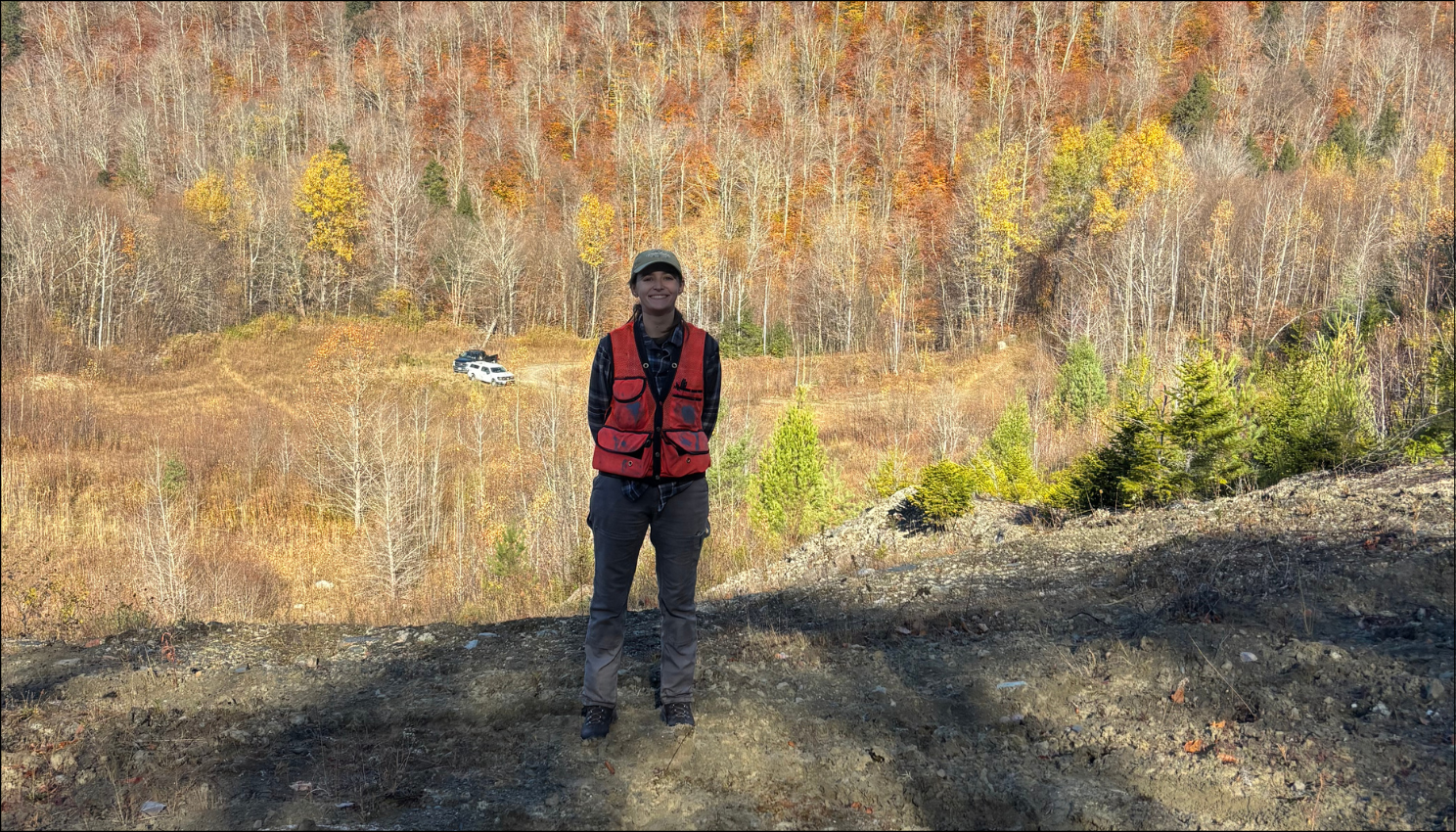
On her first visit to an active harvesting operation in Vermont, Samantha Stone was trying to take it all in: the machinery, the terrain, the sheer improbability of equipment that large getting into places like these.
“There were just so many things that were new to me,” she says.
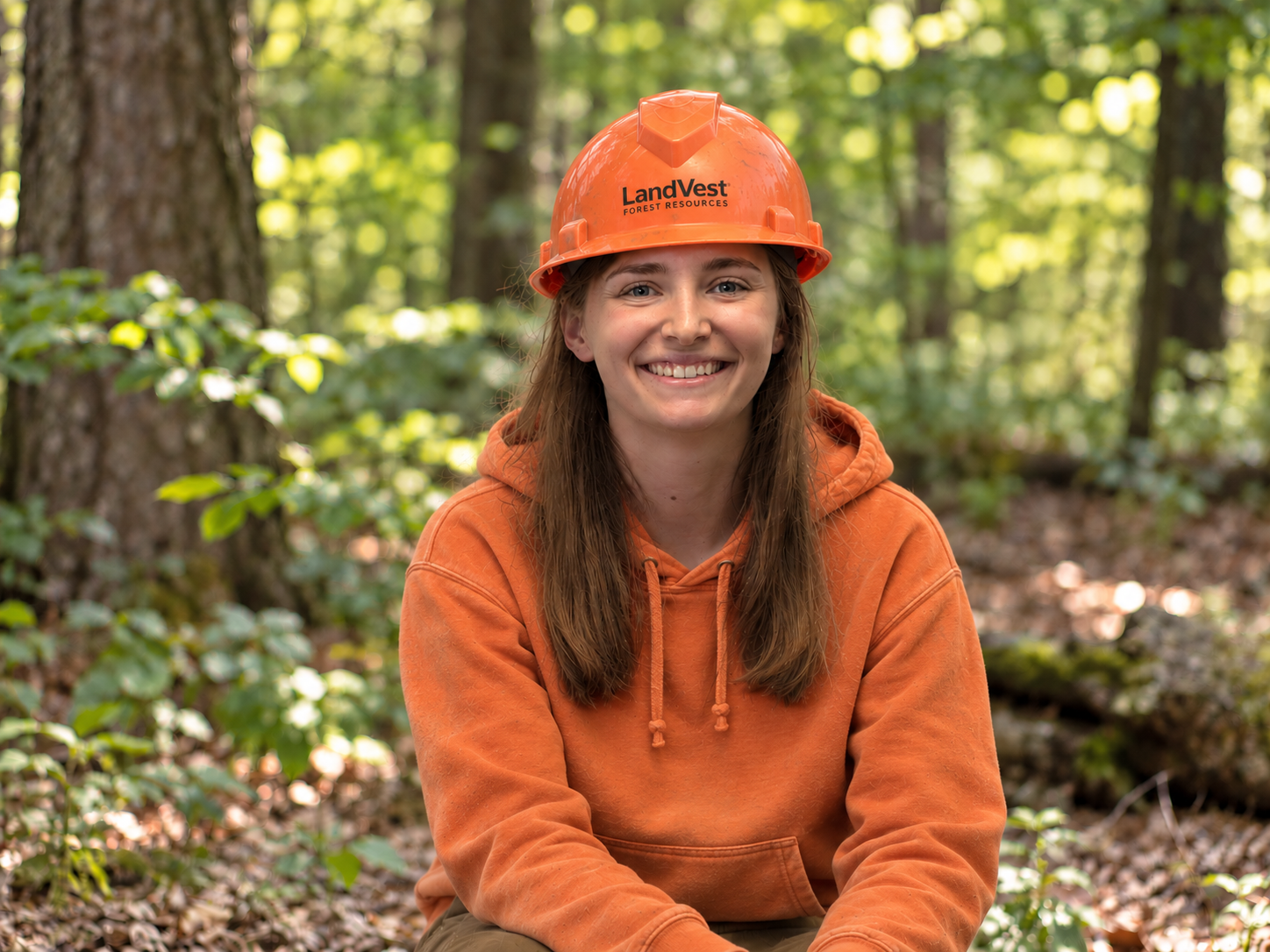
Today, as LandVest’s first forestry apprentice, she encounters harvesting operations regularly. Her footing has improved, or, as she puts it, her “scamper-ability.” More importantly, she is beginning to see the forest differently, looking beyond what is happening in front of her to understand how a forest arrived at its present condition, what a harvest is intended to accomplish, and what will grow afterward.
Not long ago, she didn’t know forestry was a career option.
“It never really came up when I was looking for colleges, nor did anyone in my life ever suggest it to me,” Stone says.
Stone graduated from Embry-Riddle Aeronautical University with a degree in meteorology and a minor in Geographic Information Systems. Her education included data analysis, mapping software, and an internship at NOAA’s National Hurricane Center. But two summers working at Odiorne Point State Park in Rye, New Hampshire, helped clarify something else: she wanted a career that kept her outside and moving.
“No matter how bad the weather was, how tough the work was, etc., I always came home feeling accomplished with what I had done that day.”
Eventually, a LandVest job posting put a name to one possibility: forestry.
This pilot apprenticeship program offered classes, individual instruction, and a way into the profession without already knowing the field. Stone applied.
“I like to think that if I had known this field existed when I entered college, I would've pursued it,” she says. “But at this point in my life, I likely wouldn't have had the opportunity to pursue it without this apprenticeship.”
Her experience points to a broader challenge for the profession: how much potential talent never recognizes forestry as an option?
“The profession needs to do a better job of informing and recruiting high school students so we have the next cohort of foresters coming online,” says Steve Hawkes, vice president of LandVest’s Forest Resources division.
Hawkes sees another gap between studying the environment and being prepared to manage a forest. LandVest finds itself teaching basic forest measurements, inventory, and forest operations. In Hawkes’s experience, colleges previously prepared graduates more thoroughly for those entry-level responsibilities.
The apprenticeship creates another way to build that foundation. LandVest worked with the New Hampshire Timberland Owners Association and Apprenticeship NH to develop a program combining paid field experience with college coursework.
The goal was to reach people unsure about college: give them a paying job, room to advance, and the chance to discover whether forestry is right for them before making a larger educational commitment.
“Sam turned out to be a bit different than our target audience, but we sure are glad we found each other,” Hawkes says.
With a science degree already behind her, she had more formal education than the program’s original target audience. But she faced the same fundamental barrier: interest alone wasn’t enough. She needed a way to learn the profession while earning a living.
Others appear to be looking for that opening as well. According to Hawkes, the apprenticeship drew nearly ten times as many applicants as LandVest’s typical entry-level positions.
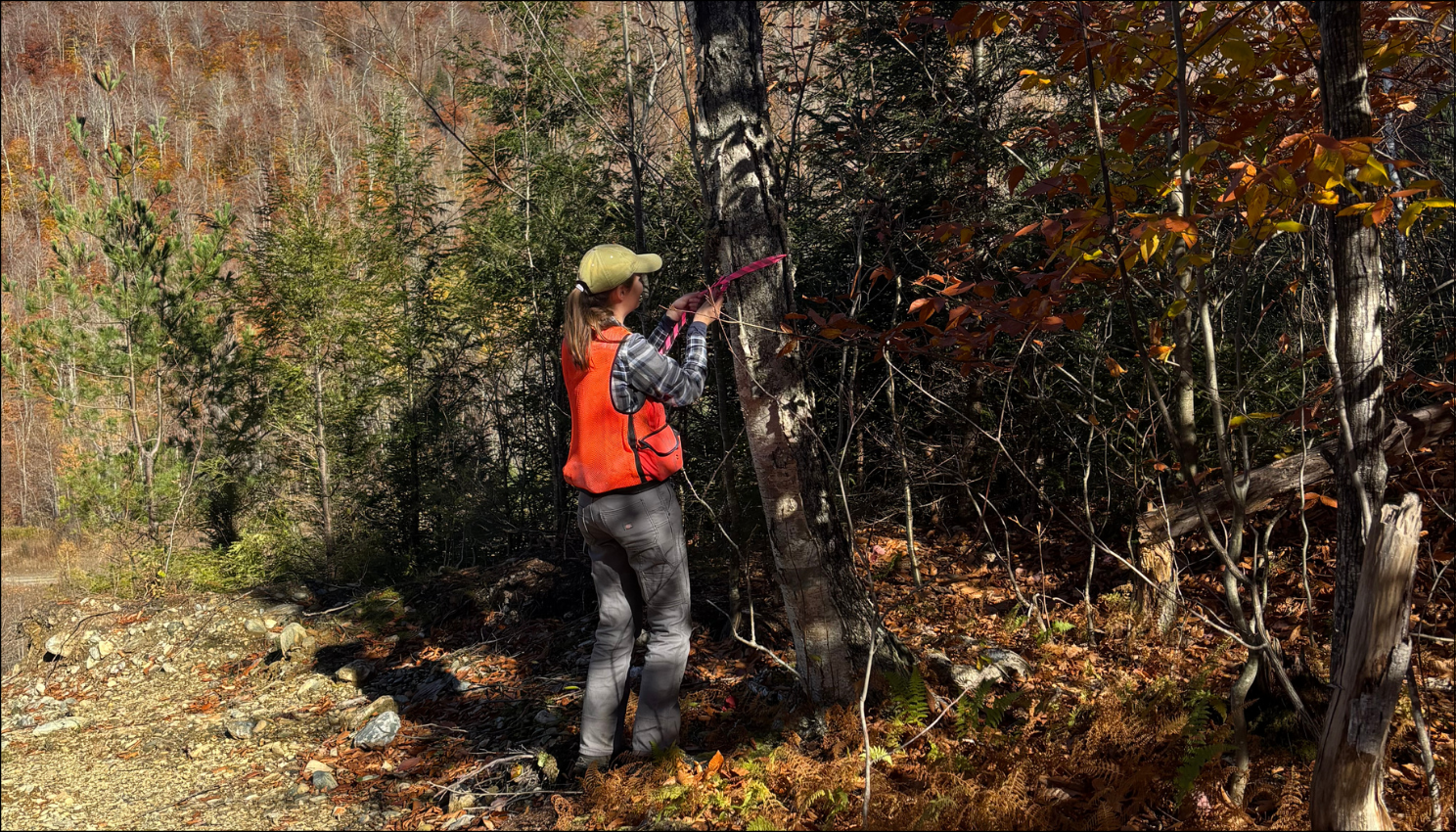
For Stone, the work is now giving substance to what a job description could only suggest. She is learning to recognize evidence of former pasture and agricultural land, to ask what an earlier harvest was trying to achieve, and to consider whether it succeeded. Tree silhouettes, bark, leaves, and branching patterns have become clues worth examining.
“I grew up going out in the woods with my dad looking for edible plants, mushrooms, animal signs, and other things, which gave me the ability to see more detail in the forest and understand its patterns and products,” she says. “Now I'm just focusing on a different type of product.”


Follow Us on Social Media