What Bill Steigerwaldt Has Learned About Land and Value Over a 40-Year Appraisal Career

Bill Steigerwaldt learned to value land long before he learned to appraise it.
His father became a forester in Michigan in the 1940s. After a decade as a forester for the State of Wisconsin, he struck out on his own, building a forestry business and growing Christmas trees on the side. Bill grew up working in both.
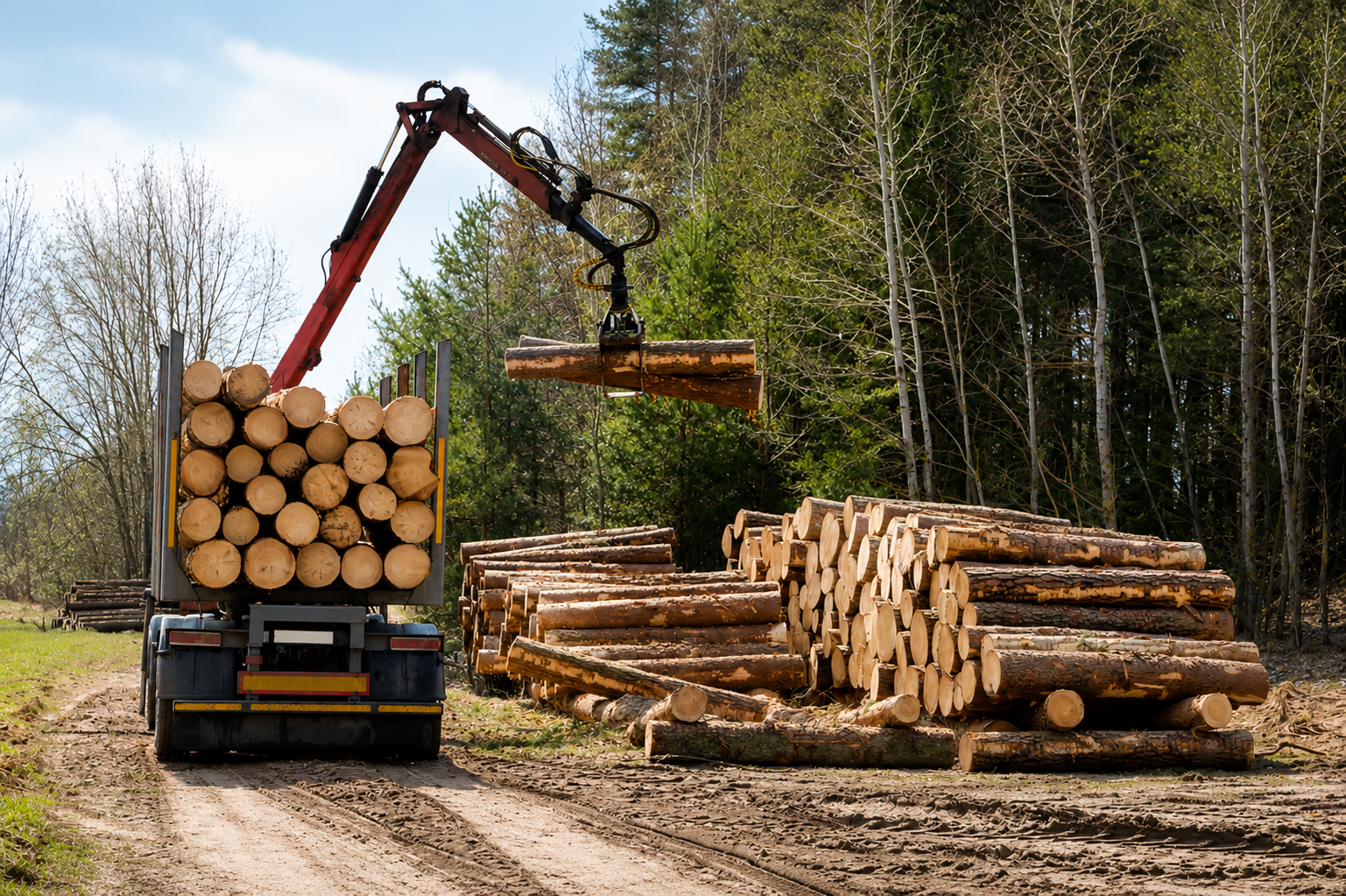
As a boy and young man in northern Wisconsin, he planted and tended Christmas trees, logged family land, cut pulpwood and hauled timber to market. He went on to forestry school himself, and eventually he and his older brother took over their father’s business.
It was there that Steigerwaldt began to notice a gap.
There were plenty of foresters who could walk into the woods, identify the trees, estimate the timber and tell an owner how many cords or board feet were standing. But sooner or later, the landowner would ask a different question: What’s the whole property worth?
That question would ultimately take Steigerwaldt from Wisconsin woodlots to some of the largest and most unusual appraisal assignments in North America.
From Counting Trees to Valuing Land
Steigerwaldt came to see forestry and appraisal as two sides of the same problem. Timber mattered, but so did access, location, soils, water, development potential, restrictions and recreational demand. Together, those characteristics determine how a property fits into the real estate market.
Over time, his assignments grew from hundreds of acres to thousands and eventually Steigerwaldt would appraise a Canadian ownership of some 14 million acres—an area approaching the size of West Virginia.
Yet scale was not always what made the work difficult. Often the challenge became finding anything comparable.
When There Are No Comparables
Several years ago, Steigerwaldt was asked to value a 40-acre property in Missouri. On a map, it might not have appeared particularly remarkable.
Inside it was a cave containing an extraordinary collection of prehistoric Native American pictographs.
A conservation organization was working to acquire and protect the site for the local tribe. Before that could happen, someone had to determine what the property was worth.
“Anytime you’re doing appraisal work, you have to consider market values from comparable transactions,” Steigerwaldt says. “What would even be comparable to a cave with a lot of prehistoric artwork?”
The answer took months of research.
He looked nationally at other pictograph and petroglyph sites. He studied “show caves” that operated as tourist attractions. He found caves used as music venues because of their acoustics. He considered whether visitors might pay to see the artwork and whether the cave itself had potential commercial use.
The exercise gets to something fundamental about appraisal. A “comparable” doesn’t necessarily look exactly like the property being valued. The appraiser has to determine which characteristics actually drive value, then find market evidence for those characteristics.
Steigerwaldt faced an even more consequential version of the problem when he was asked to appraise privately held land at Wounded Knee, South Dakota, site of the 1890 Wounded Knee Massacre.
“To be on that property and walk it, you really think about the history we’ve been through,” he says. “You’re very humble looking at properties like that.”
With few obvious comparisons nearby, Steigerwaldt looked nationally at transactions involving battlefield sites and other historically significant properties.
Assignments like these also highlight an important distinction.
Economic Value and Emotional Value Are Not the Same Thing
“These kinds of properties quite often have an emotional value to people that can’t be measured in dollars and cents,” Steigerwaldt says.
Though the challenge is the same, while the attachment may be priceless, for an appraiser, the real estate still has to be valued, whether the property is a family lake compound, a century-old ranch, or a forest property that’s never been sold.
“In my world, you have to be able to take an economic perspective and find the highest and best use that matches what that unique property could possibly be used for,” Steigerwaldt says. “And that’s very difficult.”
The Growing Value of Scarcity
Over four decades, Steigerwaldt has watched another force become increasingly important: scarcity.
Large, intact landscapes are harder to find. So are undeveloped shorelines, unfragmented forests and properties that have significant conservation or recreational potential.
His work has put him at the center of some remarkable examples.
For the U.S. Forest Service, he twice appraised Minnesota’s approximately 800,000-acre Boundary Waters Canoe Area Wilderness. Around Badlands National Park, his appraisal work supported efforts to consolidate lands and remove barriers so buffalo could once again move across more of their historic range.
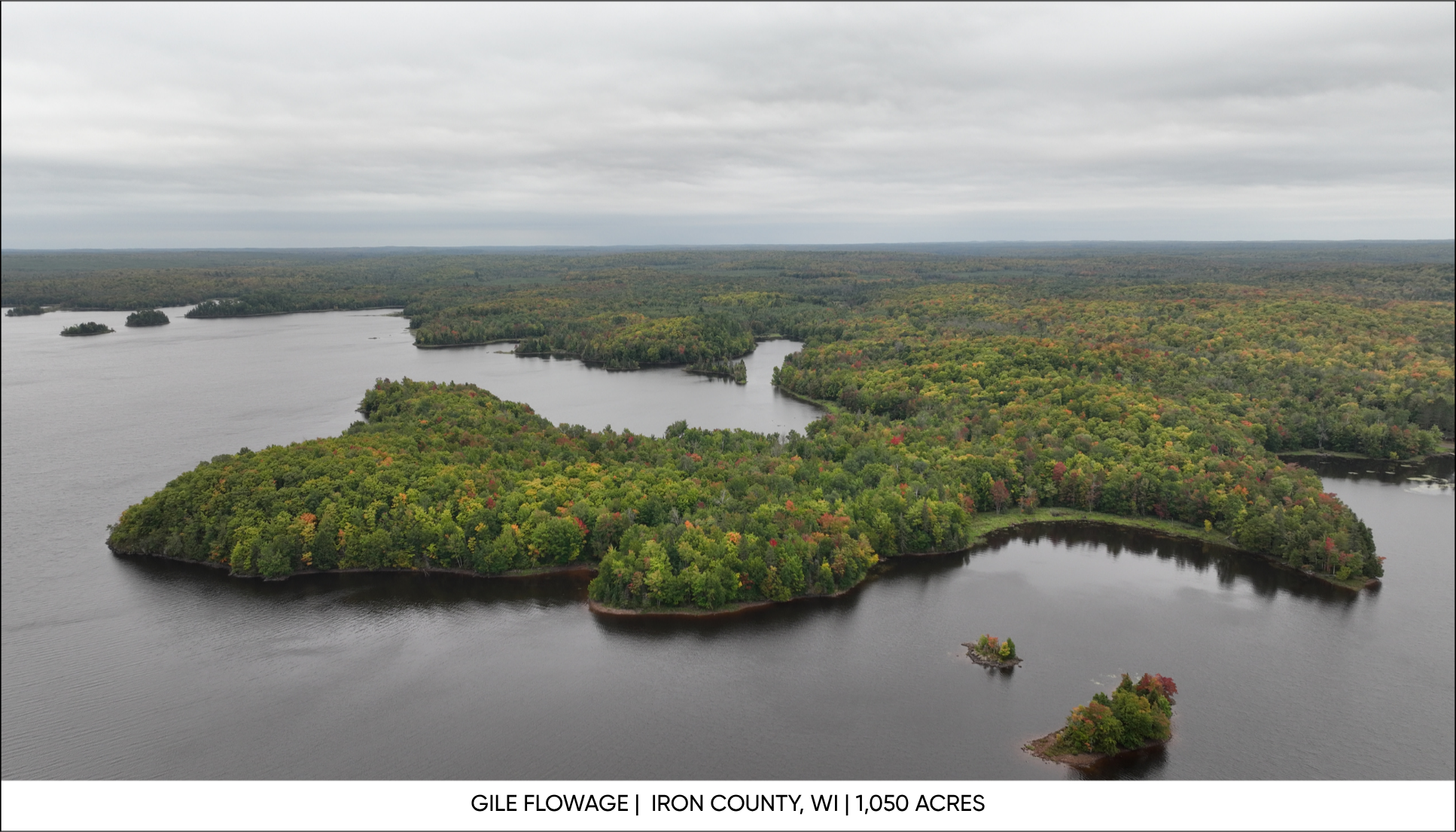
More recently, he led a LandVest appraisal of 1,022 acres containing 18.9 miles of shoreline around Wisconsin’s Gile Flowage. Iron County ultimately acquired the land, protecting much of the reservoir’s remaining undeveloped shoreline for wildlife habitat and public recreation. The appraisal helped support the grant funding needed to make the acquisition possible.
Each assignment was different, but together they demonstrate something Steigerwaldt has watched throughout his career: as certain kinds of land become harder to replace, scarcity becomes an increasingly important part of their value.
What Creates Value Keeps Changing
Steigerwaldt has watched the forces shaping land value change.
He has evaluated power-line corridors needed to bring electricity to data centers. He has valued easements associated with underground mines being considered for carbon dioxide sequestration. Other assignments involve solar energy, carbon credits, conservation easements and mitigation or habitat banking.
Yet some of the questions he encounters would have been familiar to his father.
Steigerwaldt still advises families trying to decide what comes next for generational land. A property once owned by one couple may eventually belong to a dozen grandchildren. Some want to keep it. Others want to sell. Others may want to conserve the property while finding a way for it to produce income.
“We consult with families and give them ideas of how to do that,” he says, “and to protect properties and kind of bring a common use back to that land.”
Forty Years of Judgment
Steigerwaldt still approaches the work with the perspective he developed in the woods of northern Wisconsin: understand the resource, how it can actually be used, what constrains it and find the best market evidence available.
The tools have changed. The market has changed. And the properties have ranged from family forests to culturally significant sites and landscapes encompassing hundreds of thousands, even millions, of acres.
David Speirs, LandVest’s Vice President of Land Investments, says Steigerwaldt’s contribution extends beyond the extraordinary assignments themselves.
“To have Bill’s depth of experience and tenacious work ethic, even after 40 years, is truly a gift,” Speirs says. “He is also generous with his time and enjoys assisting with the development of our next generation of land professionals.”
“It’s constantly changing, and more challenging every day, but the variety is amazing,” he says.
“It’s just really been a fun career.”



 To landvest.com

.jpg)


Follow Us on Social Media