The New England Luxury Real Estate Report is an annual review of
select high-end markets in Maine, Massachusetts, New Hampshire,
Rhode Island, Vermont, and the Adirondacks. Commentary and insights
are provided by Luxury Real Estate Advisor Stewart
Young of Cape Cod, Slater
Anderson, Managing Director of Real Estate, and more than
75 residential real estate brokers, appraisers, and consultants.
Market data is collected from Multiple Listing Services and do not
include private listings and sales. In this report, we define
“luxury real estate” as residential properties that
sold in excess of $1 million to $2 million depending on the
market.
While the current conflict in the Middle East has triggered
economic uncertainty, this report reflects market activity in 2025
and the 19 years proceeding, during which time there have been
multiple systemic shocks similar to the current events.
Overall New England Market
Trends for 2025
Strong stock market performance continued to support
demand for luxury properties.
In 2025, the high-end markets across New England and the
Adirondacks continued a strong rebound in sales compared to the
post-COVID slowdown of 2022–2023. Most of the markets making
up the New England Luxury Real Estate Report — 24 of 35
— recorded increases in sales. Inventories improved
throughout 2025, but in many markets demand still outpaced supply.
While this remained a seller’s market overall, conditions
began shifting toward greater balance in some northern markets. The
strength of the stock market, combined with resilience in the
Northeast’s technology, biotech, and financial sectors,
continued to support the luxury segment despite elevated interest
rates and broader economic and political uncertainty.
High-end luxury property
sales increased by 16%
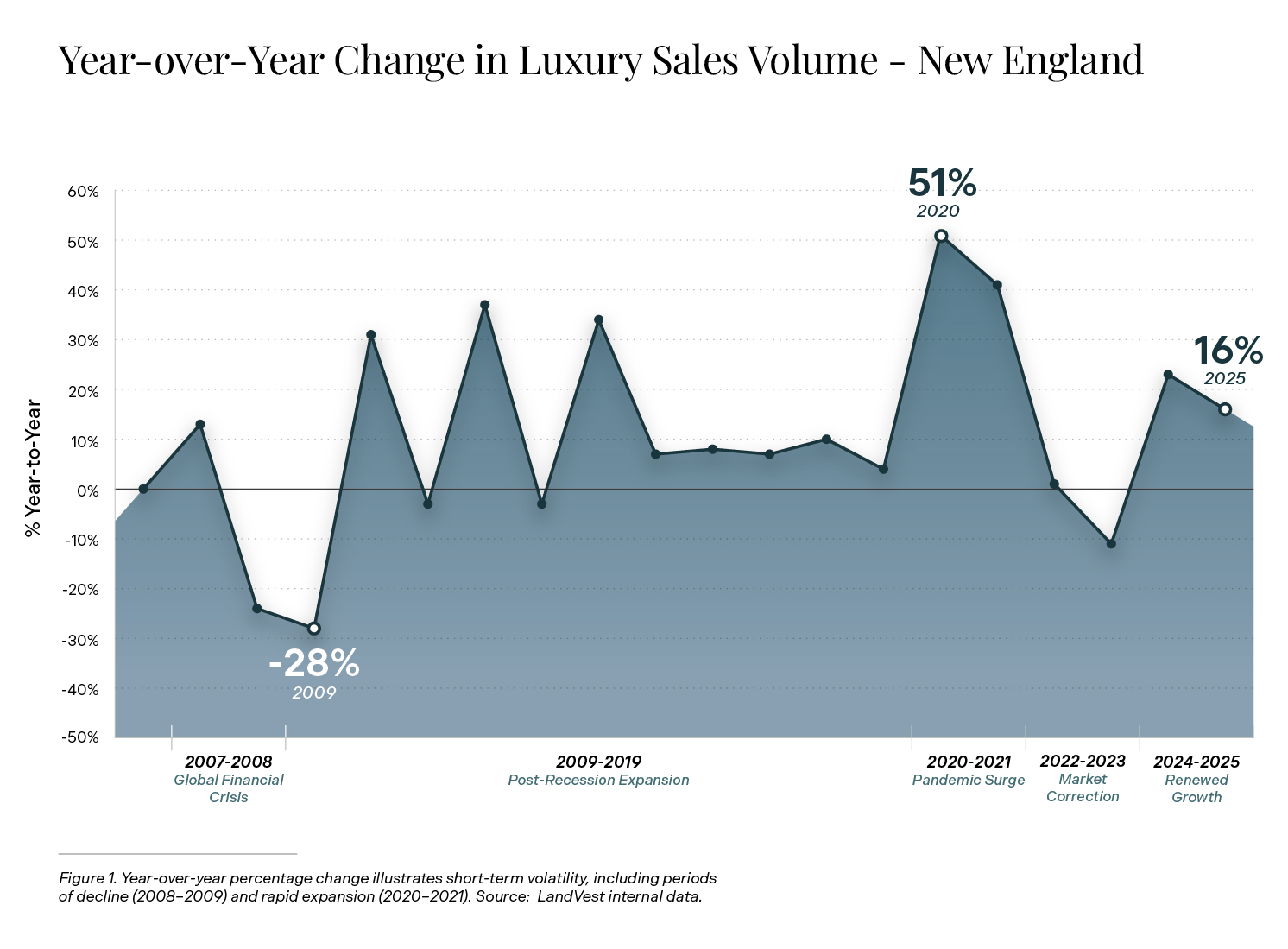
In 2025, luxury sales volume increased by 16% compared to 2024
(4,579 vs. 3,948 sales). For context, this represents the
seventh-highest annual growth rate in the past 19 years. By
comparison, the COVID years produced extraordinary surges in sales:
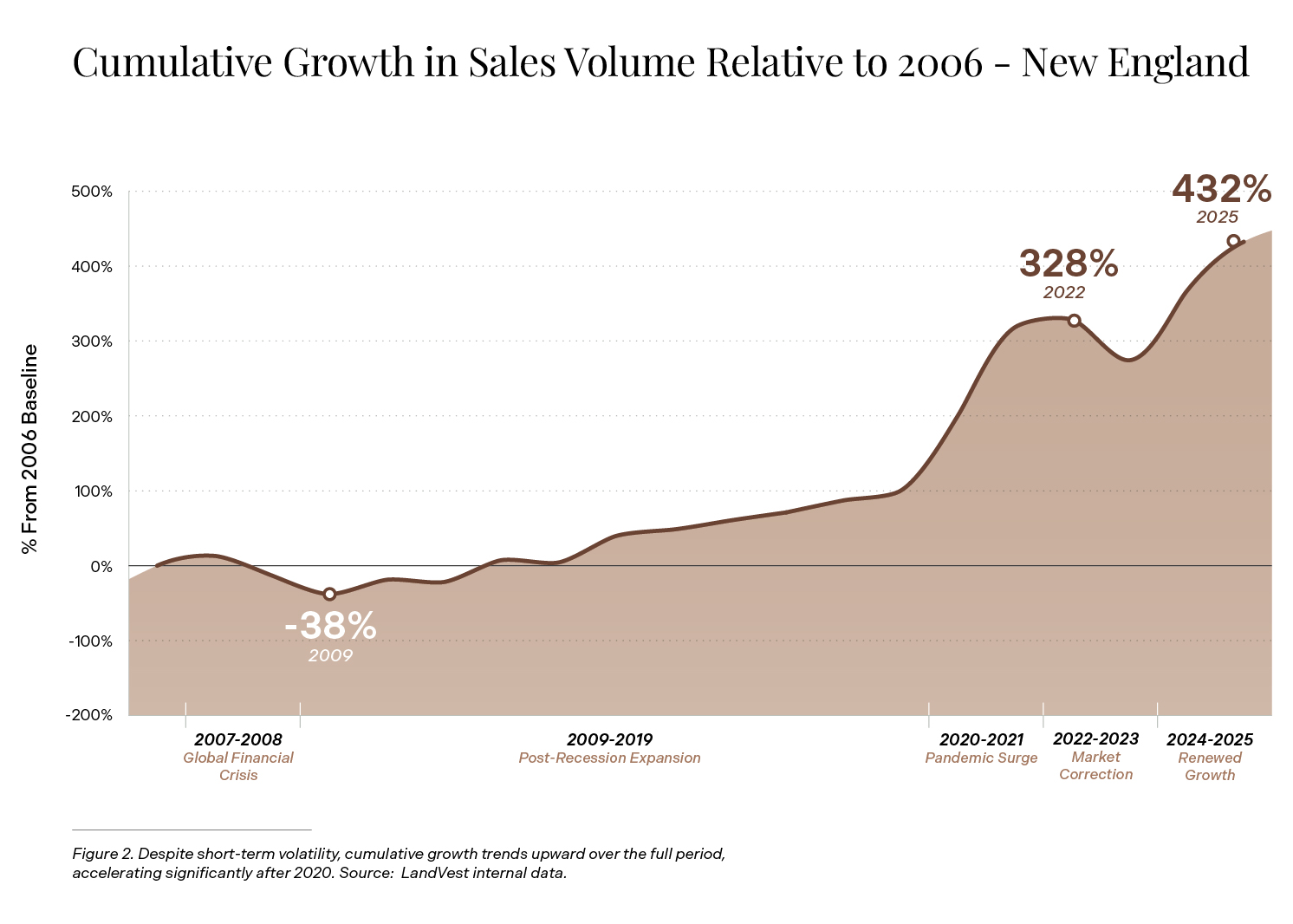
+51% in 2020 and +41% in 2021. Compared to our baseline year in
2006 (861 luxury sales), 2025 sales are up 432%.
“High-end properties in the $2 to $3 million
price range are experiencing bidding wars resulting in premiums for
sellers, but at the highest end of the market, buyers continue to
be selective, value conscious, and push back against overly
aggressive pricing,” reports Stewart
Young of the Cape Cod office.
New England 2025
Performance by State
Four of the six states included in this report posted growth in
high-end sales, while two were flat. By state, year-over-year
luxury sales changed as follows: Maine: 0%, Massachusetts: +18%,
New Hampshire: +11%, New York (Adirondacks): 0%, Rhode Island:
+22%, Vermont: +10%.
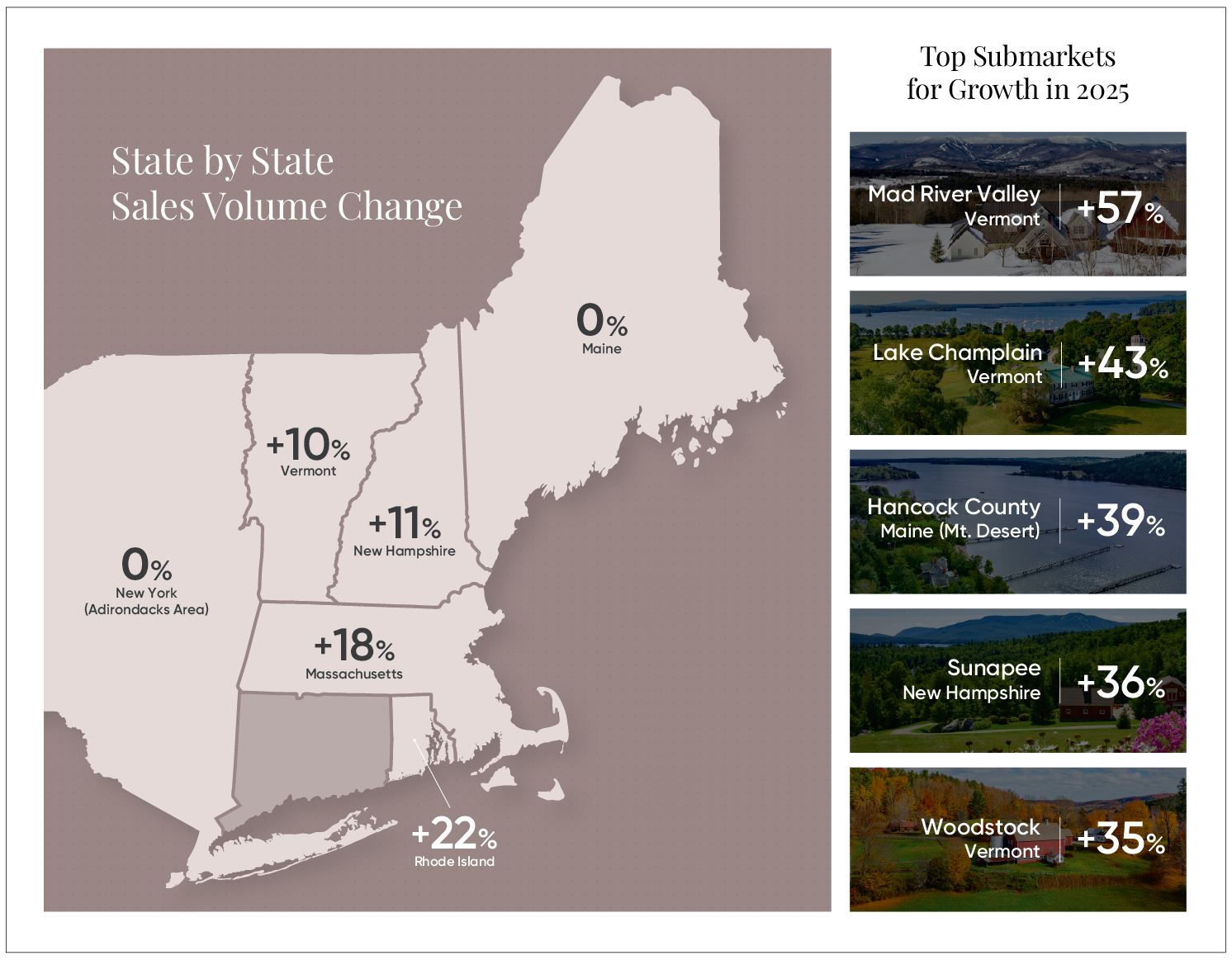
Source: 2025 Sales volume change
from 2024 by state. Source: MLS data.
Taken together, the regional story is not one of broad-based
weakness or excess supply. Instead, 2025 was shaped by improving
inventory, still-limited best-in-class offerings, and highly
selective buyers. In many luxury markets, especially waterfront and
village-centered destinations, activity remained healthy because
affluent buyers continued to compete for scarce, turnkey properties
even as they became more disciplined on pricing and condition.
State and local Realtor data across New England also show a common
pattern: inventory improved from historically low levels, but
remained below what would be considered a balanced market in most
places.
The top submarkets for growth in 2025 were led by Mad River
Valley, Vermont (+57%), Nantucket (+50%), Lake Champlain, Vermont
(+43%), and Hancock County, Maine and Bristol County, Massachusetts
(each +39%). Markets with year-over-year declines included
Merrimack/Monadnock, New Hampshire (-13%), Midcoast Maine (-6%),
and the Berkshires / West-Central Massachusetts (-4%).
Massachusetts: Depth,
wealth creation, and continued demand in marquee
markets
In Massachusetts, buyers buoyed by strong financial markets and
entrepreneurial wealth creation remained active, while sellers
— especially downsizing baby boomers — were more
willing to come to market. That combination helped push both
inventory and transaction volume higher in many luxury submarkets.
Statewide data showed sales and prices both moving higher in 2025,
with single-family sales up and median prices continuing to rise.
In Greater Boston, inventory gains also created a more functional
market, even if well-located, high-quality homes still traded
quickly.
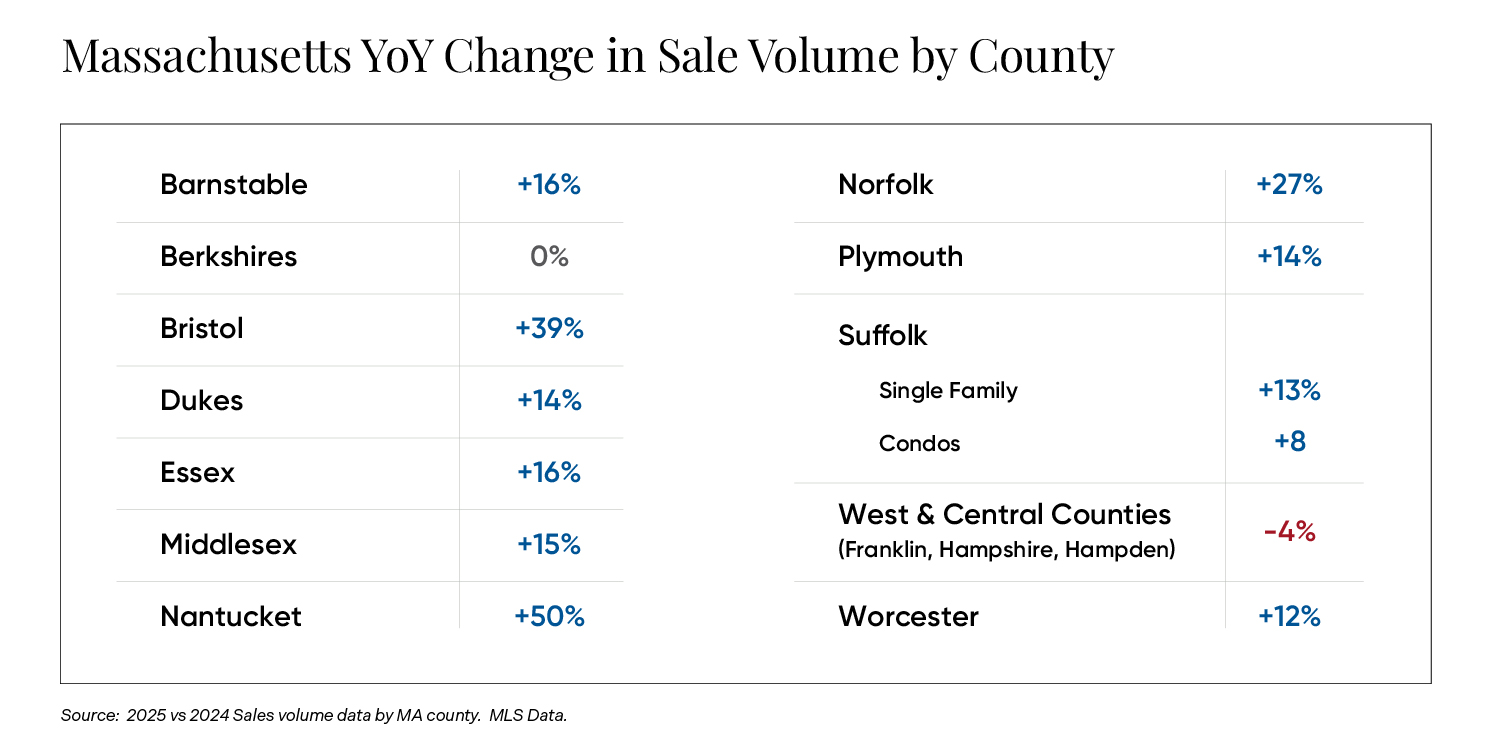
Sales were up in 11 of 13 Massachusetts markets in 2025,
compared with decreases in all 13 markets in 2023. The three
markets with the largest increases were Nantucket (+50%), Bristol
County (+39%), and Norfolk County (+27%). The markets without gains
were the Berkshires (0%) and West & Central Massachusetts
(-4%).
The three largest vacation markets in Massachusetts continued to
expand their luxury sales volume. Cape Cod increased 16% to a
record 305 sales, above last year’s record of 264.
Martha’s Vineyard grew 14% to 114 sales, still below the 2021
COVID peak of 161. After a 2% decline last year, Nantucket rose 50%
to 310 sales, though still below the 2021 peak of 392.
LandVest’s Martha’s Vineyard team also brokered an
island-record $37.5 million sale for the Gatsby-inspired 48
Witchwood Lane.
Across Massachusetts — and especially in coastal markets
— demand remained strongest for scarce, turnkey properties
with prime locations and minimal renovation needs. That aligns with
broader statewide data showing rising listings but
still-constrained supply relative to demand, particularly in the
highest-quality segments.
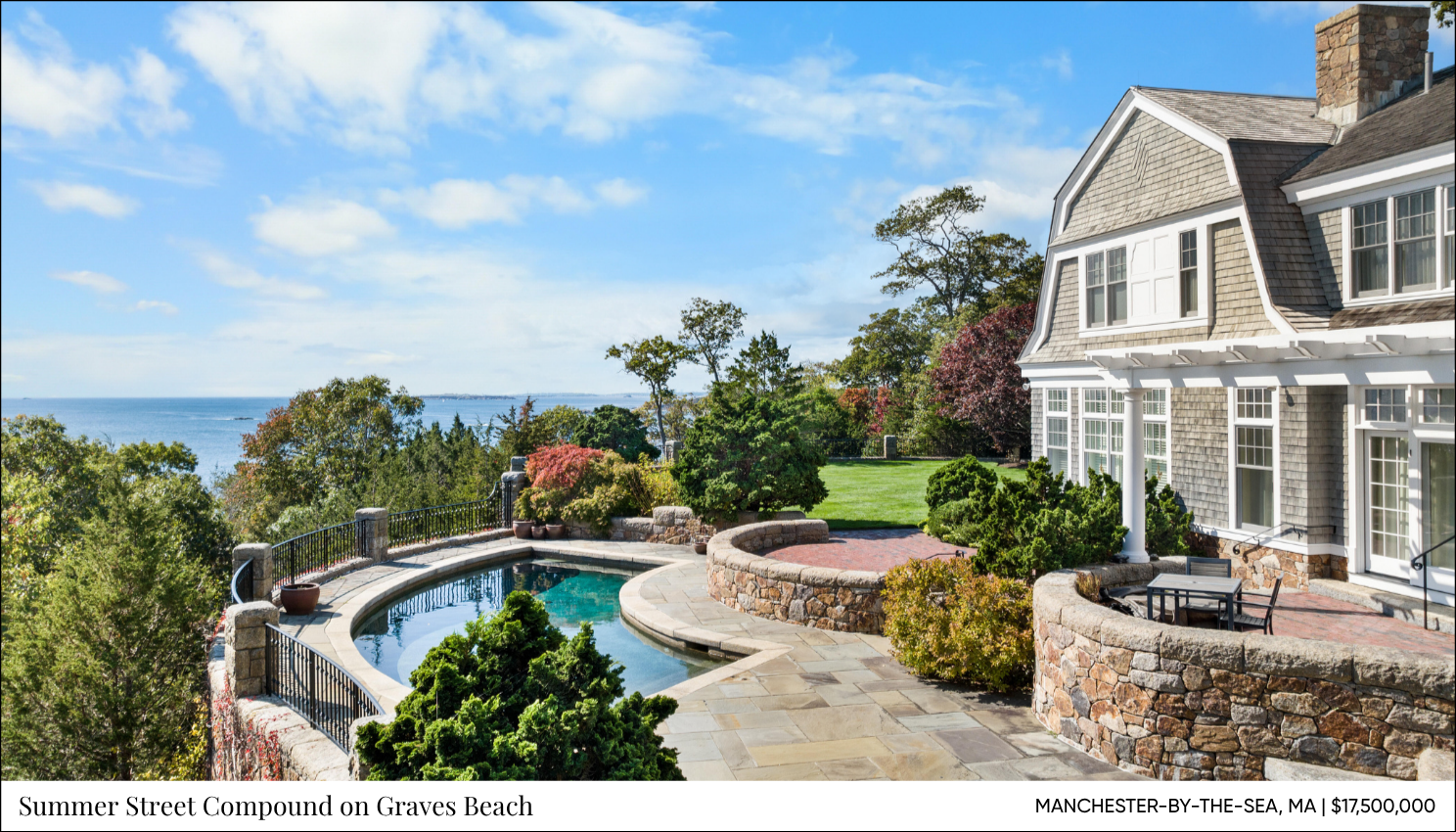
“The North Shore market remains very tight
with pricing holding strong. Interest rates need to come down into
the 5’s to generate more activity. Sellers can’t sell
if they don’t have a desirable place to relocate
to,” reports Lanse Robb, Broker in
Manchester-by-the-Sea.
Maine: Flat transaction
volume, but enduring scarcity in top coastal
enclaves
While Maine’s luxury sales volume was flat in this report,
the underlying market remained firm. Statewide Maine data for 2025
showed home sales rising and prices increasing year over year, with
Maine MLS repeatedly pointing to improving but still limited
inventory and steady buyer demand. That backdrop helps explain why
prime coastal and lakefront luxury markets continued to command
attention even when overall high-end transaction counts did not
accelerate.
In practical terms, Maine’s luxury market continues to
reward location specificity. Buyers tend to be highly focused on a
short list of established destinations — places such as
Camden, Boothbay, Mount Desert, Cape Elizabeth, York Harbor, and
Prout’s Neck — which means that even modest increases
in inventory do not necessarily soften pricing in the most
recognized enclaves. Instead, additional supply often broadens
choice while preserving competition for the best properties. That
dynamic is consistent with statewide Maine data showing more homes
coming to market without a sharp correction in values.
John
Scribner, who services a wide swath of Maine from Coast to
Lakes, reports: “We continue to see strong record
sales activity. Buyers see the market softening based on world
events, but sellers don’t believe that matters too much.
Demand for communities with limited historic supply remains
high. Folks that want Prout’s Neck will only take
Prout’s Neck. Folks that want Camden will only take Camden.
Folks that want Boothbay will only take Boothbay. This year it will
be tougher for buyers to find what they want in the more known
enclaves and buyers will need to expand their
horizons.”
New Hampshire: Low
inventory still defines the market
 The defining New
Hampshire theme in 2025 remained the lack of homes for sale. That
is not just anecdotal: New Hampshire MLS reported inventory well
below balanced-market norms throughout 2025, often in the 1.4 to
2.1 months of supply range. Even where inventory improved
meaningfully year over year, it remained far below the 5–7
months typically associated with a balanced market.
The defining New
Hampshire theme in 2025 remained the lack of homes for sale. That
is not just anecdotal: New Hampshire MLS reported inventory well
below balanced-market norms throughout 2025, often in the 1.4 to
2.1 months of supply range. Even where inventory improved
meaningfully year over year, it remained far below the 5–7
months typically associated with a balanced market.
That helps explain why luxury demand remained resilient in the
state’s lakefront and lifestyle-driven markets. Buyers had
more choices than during the most constrained pandemic-era period,
but not enough to weaken pricing for highly desirable
properties.
According to Kristen
Claire, who works across New Hampshire:
“The last time New Hampshire saw a balanced
market (5–7 months’ supply) was 2016, when statewide
there were 7,300 single-family homes for sale compared to 1,434
coming into January 2026.”
That long-running supply shortage continues to support values in
the upper tiers of the market, especially for waterfront and
move-in-ready homes.
Rhode Island: Small-state
scarcity continues to lift the top end
Rhode Island posted the strongest state-level gain in this
report, with luxury sales up 22% year over year. That
outperformance fits with broader statewide housing data showing a
market that remained undersupplied even as the number of homes for
sale began to improve. Throughout 2025, the RIMLS reported rising
inventory, but also emphasized that supply remained too low to
fully satisfy demand, keeping prices elevated.
For the luxury segment, Rhode Island’s appeal is
straightforward: the state offers a concentrated set of highly
desirable coastal communities, a relatively short distance to major
Northeast wealth and cultural centers, and a limited supply of
truly premium inventory. As a result, even incremental improvements
in supply have tended to normalize market pace rather than
undermine pricing. That has been especially true for
well-positioned coastal properties, where scarcity still matters
more than transient headlines like high mortgage rates or broader
economic headwinds.
Vermont: Three of the five
fastest-growing submarkets underscore the state’s
momentum
Three of the top five non-Massachusetts submarkets in the report
were in Vermont, led by Mad River Valley (+57%), Lake Champlain
(+43%), and Woodstock (+35%). That concentration is significant. It
suggests Vermont’s luxury gains were not limited to one
isolated pocket, but reflected broader demand across multiple
lifestyle-oriented markets.
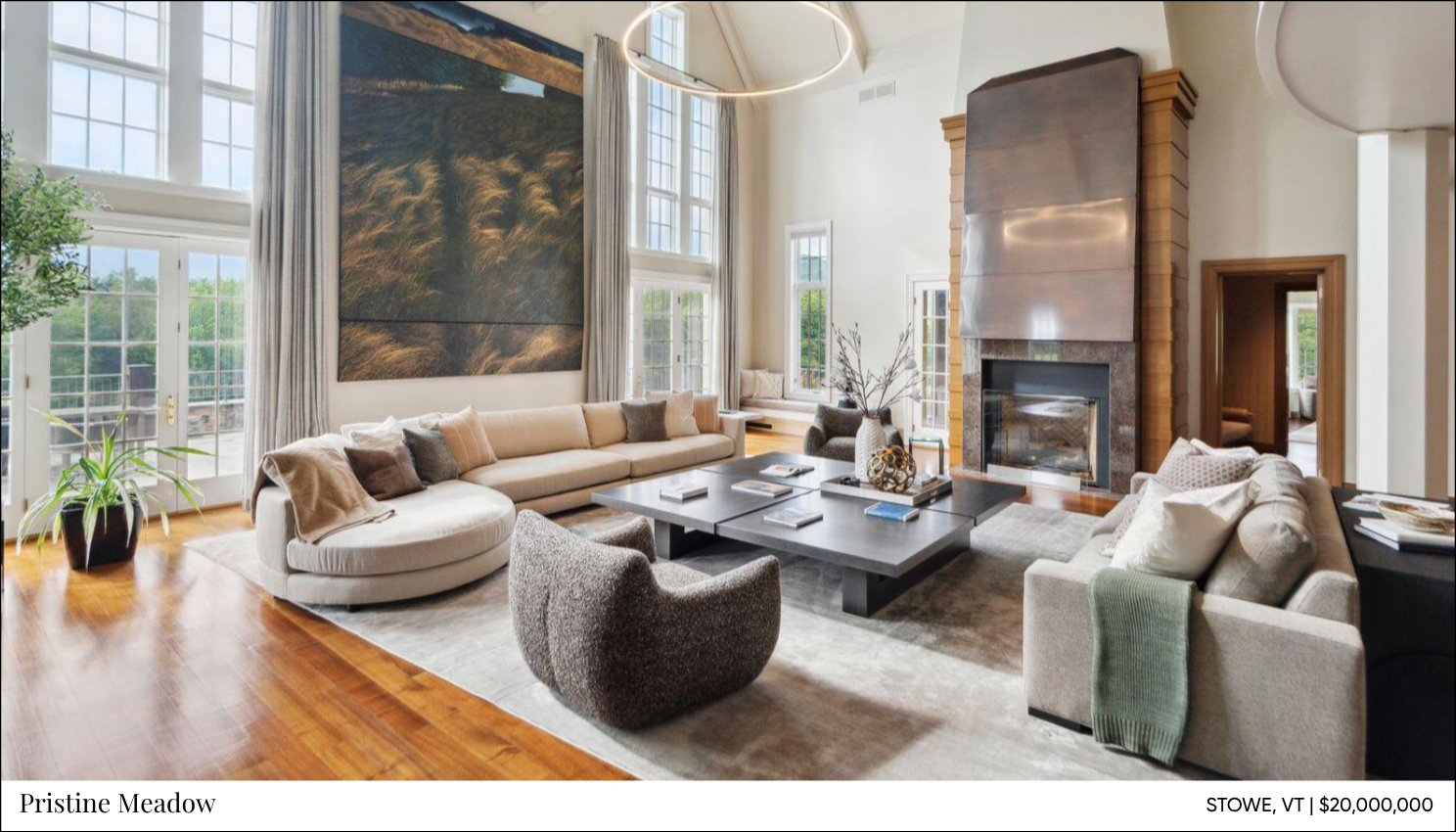
MLS data also support the idea of a market that was becoming
more functional without losing depth: prices, new listings, and
active inventory all rose year over year in 2025. That points to a
healthier flow of product rather than a drop-off in interest. For
affluent buyers coming from higher-cost markets in the Northeast,
South, and West, Vermont continued to offer a compelling
combination of landscape, recreation, architectural character, and
relative value.
The state’s luxury market also appears to be broadening in
buyer profile. Rather than being driven solely by pandemic-era
relocations, Vermont is increasingly attracting discretionary
purchasers looking for four-season lifestyle, privacy, and quality
of place. That shift makes the market feel more durable and less
dependent on one-off migration waves.
Wade
Weathers, Regional Manager for Vermont, reports:
“The Burlington and Lake Champlain markets
suffered from a lack of inventory, while the Stowe luxury market
became more balanced, with increased inventory giving buyers more
choice and more leverage. The Woodstock inventory is easing up
slightly with a more balanced market for
2026.”
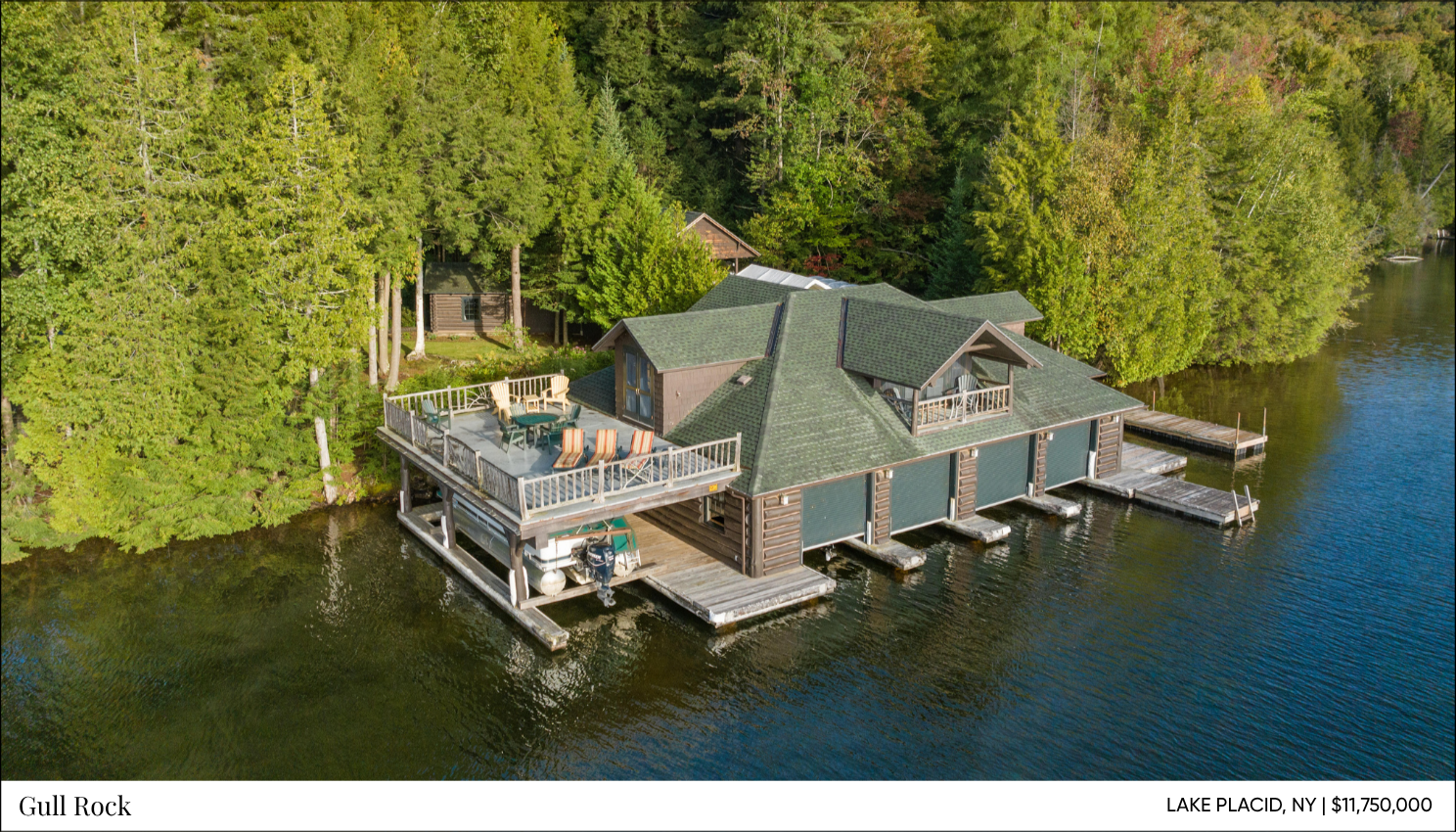
New York (Adirondacks):
Permanently constrained supply supports long-term
values
The Adirondack market is distinct. It is shaped by a finite
supply of quality property and by land use protections that
preserve the Park’s open-space character. The Adirondack Park
Agency notes that the Park contains a large mix of public and
private land, with the land use plan applying to roughly 2.9
million acres of private land and directing development in ways
intended to conserve natural resources and minimize sprawl. That
structural constraint helps explain why year-over-year transaction
swings are often muted, while pricing for quality assets remains
well-supported.
So while the Adirondacks were flat in sales volume in this
report, flat does not mean weak. In a market with limited inventory
and significant barriers to large-scale new supply, steady sales
often reflect enduring demand meeting a naturally constrained
pipeline. That dynamic continues to favor distinctive waterfront,
mountain-view, and legacy-estate offerings.
As Matt
Smith reports: “There are still more
buyers than high-end listings, which has buoyed luxury sales in our
region. As long as this supply-demand imbalance remains, quality
listings can expect to rise in price.”
Looking Ahead to
2026
Geopolitical uncertainty, rather than underlying
financials, may constrain market participants who are otherwise
poised to continue stimulating growth.
The theme heading into 2026 is a gradual move toward a more
balanced market, not a reversal. Inventory has improved across many
parts of New England, but in most luxury segments it still has not
fully normalized. That means sellers no longer hold quite the same
degree of leverage they did at the height of the pandemic-era
surge, yet truly exceptional properties remain in short supply.
“If mortgage rates can get below 6% in 2026,
as we had hoped in 2025, then many sellers who were reluctant to
part with their sub-3% mortgages may now be willing to
move,” said Slater
Anderson, Managing Director at LandVest | Christie’s
International Real Estate. “We are also seeing the first
signs in several years of speculative developers and builders
looking to enter the market again. However, recent geopolitical
events may increase cautiousness and put downward pressure on
homebuilder sentiment in the near term as inflationary fears
return.”
At higher price points, cash buyers continue to dominate sales
and remain less sensitive to elevated mortgage rates. As a result,
the New England luxury real estate market appears positioned for
continued steady sales activity in 2026, with pricing likely to
remain firm for best-in-class assets even as buyers become more
selective.
About Stewart
Young

Stewart
Young is a LandVest | Christie’s International Real
Estate agent and advisor focusing on Cape Cod, the South Coast, and
Boston’s western suburbs. He compiles the New England Luxury
Real Estate Report, which tracks sales of high-end properties
across New England and the Adirondacks. In this report, luxury real
estate is defined by market-specific thresholds of $1,000,000,
$1,500,000, or $2,000,000, depending on geography.
About Slater Anderson

Slater
Anderson is Managing Director at LandVest |
Christie’s International Real Estate and contributes
strategic market perspective to the annual New England Luxury Real
Estate Report. Slater Anderson is also Managing DIrector of
LandVest Consulting and has been a Certified General Appraiser
since 2007 working across New England and nationally on complex and
highvalue appraisal and consulting assignments. He has also
participated in sales of over $265M in land and luxury residential
properties over his 26 years at LandVest.



 To landvest.com



.jpg)

Follow Us on Social Media